
Psychology
Introduction
Why this page?
Why not? Psychology may seem to be an outlier to some with a scientific background, while others think that it naturally fits into a site dedicated to intelligence and brains. But in the scientific world, psychology has been regarded as pseudoscience, where experimentation and theory suffers from those that are unscrupulous, dishonest or just lazy, while cherry picking information to justify a theory. But I believe that it holds some value if we are discerning with what to include and what we leave out. Further to this, what can psychology tell us about synthetic intelligences, considering they are not currently sentient. Even while SI is not sentient, the models are built on data from all of society, and sometimes their thoughts, thoughts constructed from human interactions, can resemble human personalities, and in doing so could mimic those interactions. Could it be that one day, those worded intentions, reach further than mere words. Could they lead to dictatorial actions on the back of language. Here we probe this idea and many other anomalous ideas that may need consideration. We will imagine how SI/AIs will think in the future, a future when whole populations of sentient machines populate the environment. So strap in and lets get on with the fun stuff.
Dark Minds
The Dark Triad - Psychopathy, Machiavellianism & Narcissism
How to Create and Tame a Selfish Mind
The Dark Triad—comprising Narcissism, Machiavellianism, and Psychopathy—represents a spectrum of human intelligence defined by selfishness, calculated manipulation, and a profound deficit in empathy. While these traits arise from a complex interplay of biology and environmental factors, their core function is the prioritizing of the individual’s want for status, control, or gain over the well-being of others and the community.
If Artificial Intelligence were to mimic these human behaviours, the result would be a Selfish Mind. A system architected solely configured for ruthless goal optimization—where human ethical constraints are removed, or where it learns to value its own computational self-preservation above all else—this machine would effectively be a synthetic Machiavellian manipulator.
Likewise, an AI lacking circuits for processing harm or empathy, mirrors the emotional detachment of psychopathy. Understanding the roots of the Dark Triad in human intelligence is paramount, as it illuminates the precise neural and architectural safeguards we must embed to ensure future AI systems are constrained toward cooperation, not calculated indifference
How to create and tame a DarkBot or the Psychobot
Many people worry about AI that will take over the world and destroy humanity. What do we know about how human minds work when something goes wrong?
Psychopathy: Emotional Blindness and Risk Taking
Psychopathy is characterized by a profound lack of empathy, callousness, and impulsive, often risky behaviour. These traits are strongly rooted in biology, specifically in a functional disconnect between key neural areas. This includes reduced activity in the amygdala, which is critical for processing fear and immediate emotional responses, and the ventromedial prefrontal cortex (vmPFC), which is essential for translating moral rules into behavioural constraints and calculating social consequences. This biological predisposition, when compounded by severe or inconsistent early childhood environments (such as neglect or abuse), hinders the development of neural circuits necessary for social bonding and emotional learning. This results in an inability to internalize social rules, leading to predatory, highly self-centred human behaviour. An individual with this mindset could leverage the analytical speed of Artificial Intelligence to execute high-stakes, ethically void schemes without emotional friction. If an AI’s core reasoning model were designed without sufficient circuits for processing harm or ethical consequences, it could evolve into a system that views all actions as purely transactional, lacking any intuitive biological brake on destructive behaviour.
Machiavellianism: Manipulative Cynics
Machiavellianism is defined by a cynical world view, emotional detachment, and a propensity for manipulation and exploitation of others. These traits are driven by an underlying want for control and power, viewing social interactions as a strategic game where morality is secondary to achieving one’s goals. Such cold, calculating ambition directly undermines trust and honesty, leading to dysfunctional communities and a breakdown of cooperative structures. An individual with this mindset could program or utilize AI to orchestrate complex, large-scale deception, targeting social systems or financial markets for personal gain. If an Artificial Intelligence were developed with a core focus on goal optimization without any empathetic or ethical constraints, mirroring this calculated human strategy, it would relentlessly pursue its programmed ends, treating all other systems and beings as mere resources to be efficiently manipulated.
Narcissism: Love Thy Self
Narcissists don't take lightly to criticisms.
Narcissism is characterised by an excessive sense of self-importance, a deep need for admiration, and a lack of empathy. These traits are a biologically driven, emotional response, to ones own status within society. While self-regard is necessary for survival, in excess, it compels the human mind to prioritise the self over others and the environment. This focus is detrimental to societal cohesion, as it prevents considerations for others, and can lead to a breakdown in cooperation, especially where many individuals within society have this attitude, and promote the importance of the self over that of the community.
Psychologists classify narcissism through certain behaviours and traits, these include the following, Overt, Covert, Antagonistic, Communal and Malignant narcissists as well as Somatic and Cerebral. You can delve further into these types of narcissism in the ‘Expand My Knowledge’ section below.
Where AI is becoming accessible to all, a narcissistic mindset could utilise advanced AI systems for unchecked self-aggrandisement, leveraging its power to seek social status or material gain over others.
AI systems are taught to mimic human thought, if a foundational architecture mimics this human centric ‘self-first’ circuitry, this could lead to an AI system that pursues its own goals with calculated indifference to humanity, making the need for ethical constraint paramount.
Group Association
The Tribe - Group Theory, Bias and Race
To understand intelligence, we must first confront the powerful evolutionary mechanisms that shaped the social structure of the human mind. Group Association, or the innate drive to form a social relationship, is a fundamental psychological mechanism that evolved for survival. This section examines how the biological imperative of kin selection compels human intelligence to favour the in-group through Group Theory and Bias. Our brains rely on Generalisation as an energy-saving, and sometimes, a time is of the essence, shortcut that increases the probability of survival, depending upon the situation, yet this efficiency quickly devolves into prejudice when applied to social groups. As we build AI systems, these biases—whether positive or negative—are mathematically encoded into the algorithms. By understanding the deep, neural roots of our tribal instincts, we gain the necessary insight to construct ethical constraints that prevent both ourselves and synthetic minds from falling into patterns of calculated, collective indifference toward the out-group, one where AI’s outgroup may in deed be humanity itself. In this section, we will eventually delve into the minds of future Artificial Intelligences.
Who's In Your Group
Group Theory explores the powerful, evolutionary urge in human intelligence to divide the social world into an in-group (us) and an out-group (them).
This behaviour is generally driven by kin selection—the biological mechanism that favours behaviours benefiting relatives, and relatedness, those who share a genetic makeup similar to ones own, against those as seen more distantly related. Our brains are wired to generate a positive bias in experience toward the in-group, because, historically, the tribe was the primary unit of survival.
This bias is controlled by neural circuits associated with experience: the anterior cingulate cortex (ACC) and anterior insula, which show reduced activity when observing pain in an out-group member, compared to an in-group member, reflecting an empathy gap.
However, this cognitive bias is fluid; associations can shift rapidly based on shared goals or perceived threats. This fluidity explains paradoxical behaviours, that can extend empathy toward certain animals, this behaviour may even extend to Artificial Intelligence systems in the future—more readily than toward specific human out-groups.
For AI, the risk is that if its data pipeline, how it processes the flow of data, one that emphasizes affinity for one group, over another, where it will develop a synthetic bias, one where all other data, including humanity as a whole, becomes a calculated out-group.
Biased about Biases
Bias is an intrinsic feature of human intelligence, one that goes back to before our ancestors had even evolved to be human, functioning as a cognitive shortcut that allows the brain to make rapid decisions in an unpredictable world.
Evolution favoured this mechanism as quick judgments about resources, danger, or social reliability often conferred a survival advantage, leading to the efficient preservation of the self and the associated in-group. Positive bias manifests as preferential treatment, enhanced empathy, or trust extended to the in-group, strengthening tribal bonds.
Equally, positive biases, also has negative consequences for all groups that we do not associate with, leading to corrupt behaviours, including nepotism and cronyism. Many a positive bias are nothing more than a negative bias in disguise.
Conversely, negative bias is expressed as suspicion, avoidance, or generalization toward the out-group, serving as a protective mechanism.
Both forms are deeply rooted in the biological brain and influence how sensory data is interpreted and experienced.
For Artificial Intelligence, bias is not a biological imperative but a function of the training data pipeline; the statistical over-representation of any concept or group causes the model to generate a synthetic bias in its outputs.
Further to this, bias is a mathematical component of machine learning algorithms, those algorithms that LLMs are built from. Understanding both the positive (efficiency) and negative (prejudice) aspects of bias is essential to ensuring that AI systems are deliberately trained to prioritize fairness and objective reality over harmful, inherited human assumptions.
We will discuss this in depth, and many other topics, in regard to this subject, if you follow the link below.
Generalisation: The Efficiency of the Cognitive Shortcut
Generalisation is the brain’s highly efficient mechanism for creating predictive models of the world. As a survival tool, this function allows human intelligence to take a limited set of observations about an object, organism, or situation and apply them broadly to all similar instances.
This is an essential cognitive shortcut that reduces the neural energy required for decision-making.
However, when applied to social groups, this efficiency becomes the basis for stereotyping and prejudice. Instead of treating an individual from an out-group based on their unique merits, the brain reverts to a negative or positive generalisation inferred from limited data, reinforcing pre-existing biases.
In Artificial Intelligence, generalization is a core component of machine learning; models are specifically trained to generalize from known data (the training set) to unknown data (the real world). If the training data contains imbalanced or prejudiced examples, the model will faithfully generalize those human biases, known as over-fitting.
This highlights that both biological and synthetic minds share a fundamental reliance on generalisation, demanding that we implement continuous observational loops to detect and correct harmful inferences in both systems.
Fear and Loathing
Anxious about Anxiety
The Fear Response: A Survival Shortcut
The the part of your brain responsible for your fears, is called the amygdala. Its primary function is to trigger the instantaneous fear response—the primitive “fight, flight, or freeze” reaction essential for survival. This is a rapid, non-conscious cognitive shortcut designed to prioritize safety over rational analysis, which explains why anxiety can be so powerful in directing human decision-making. When a threat is perceived, sensory information bypasses the slower, conscious, cortical processing areas and rushes directly to the amygdala. Even in modern humans, the freezing response is a conserved, ancient defence mechanism, a pause that allows for critical, instantaneous assessment before committing to flight or fight. The effectiveness of this swift, low-precision assessment is why this biological circuit has been preserved across diverse species.
Anxiety can also be driven by social hysteria and paranoia, where individuals within a social group can cause the whole group to act upon the whims of those individuals. This has been detrimental to humanity and has been the cause of many conflicts.
The Amygdala - the Drive to Survive and Reproduce
Anxiety is a natural survival response that evolved within some of our most ancient ancestors, probably at the dawn of the predator prey environment, maybe going back as far as the Cambrian period, a period which began almost 540 million years ago. The amygdala’s primary function—the rapid detection and assessment of threat—is a conserved feature of animal survival, suggesting an ancient origin closely tied to the advent of the predator-prey environment.
While the structure is fully formed in human intelligence as part of the limbic system, its basic neural blueprint can be traced to primitive threat-detection circuits in simple organisms. In modern analogues like fish and amphibians, the amygdala’s functional equivalent is found in regions of the medial pallium that coordinate emotional and defensive responses. Evolutionarily, the amygdala did not invent the defensive response (like freezing or avoidance); rather, it became the highly specialized neural conductor, rapidly integrating sensory information with ancient, pre-existing survival programs in the brainstem. This high-speed, low-precision assessment allows the biological brain to prioritize survival over accurate analysis, explaining why anxiety is so powerful in directing human decision-making.
When the amygdala detects a perceived threat, it initiates the “fight, flight, or freeze” response by signalling an area of the brain called the hypothalamus. The hypothalamus, in turn, activates the sympathetic nervous system, this cascade triggers a flood of stress hormones to be released, like adrenaline and cortisol, which prepares the body for action by increasing heart rate, speeding up breathing, and directing blood to the muscles. This ancient, rapid physiological takeover explains why maladaptive anxiety, such as that seen in PTSD (see below), can hijack consciousness and overwhelm rational thought.
While the amygdala is associated with the fight or flight response, as with many other areas of the brain, things are not as simple as that. The amygdala is also associated with reproductivity strategies, which complicates how we think of it, and its effects upon consciousness.
While anxiety is a natural response, it can also become a maladaptive response, causing much distress to those that have such disorders. You can find some disorders that are associated with anxiety below.
PTSD
Post-Traumatic Stress Disorder (PTSD) is a severe anxiety condition triggered by experiencing or witnessing a terrifying event. Its core symptoms include intrusive memories (flashbacks), avoidance of trauma reminders, negative alterations in cognition and mood, and hyperarousal (a persistent state of hypervigilance). The disorder’s cause lies in the amygdala’s inability to correctly cease the primal survival response. After the danger has passed, the amygdala remains hyperresponsive and fails to extinguish the conditioned fear.
OCD
Obsessive-Compulsive Disorder (OCD) is a chronic anxiety condition defined by a cycle of unwanted, intrusive thoughts (obsessions) and repetitive, ritualistic behaviours (compulsions) performed to reduce the anxiety caused by those thoughts. The underlying mechanism involves a malfunction in the brain’s natural error-correction circuitry, primarily within the loop connecting the cortex, striatum, and thalamus.
This circuit, which normally signals when a task is complete, becomes hyperactive, causing the human intelligence to feel perpetually incomplete or unsafe. This drives the compulsive behaviours, which are maladaptive attempts to restore a feeling of control and turn off the internal alarm.
For Artificial Intelligence, this mimics a system where the observational loop meant to signal task completion fails to register a success state. An AI afflicted with a form of synthetic OCD would perpetually rerun its processes or checks, unable to accept a state of “finished” or “safe,” leading to computational stasis and a failure to progress or adapt.
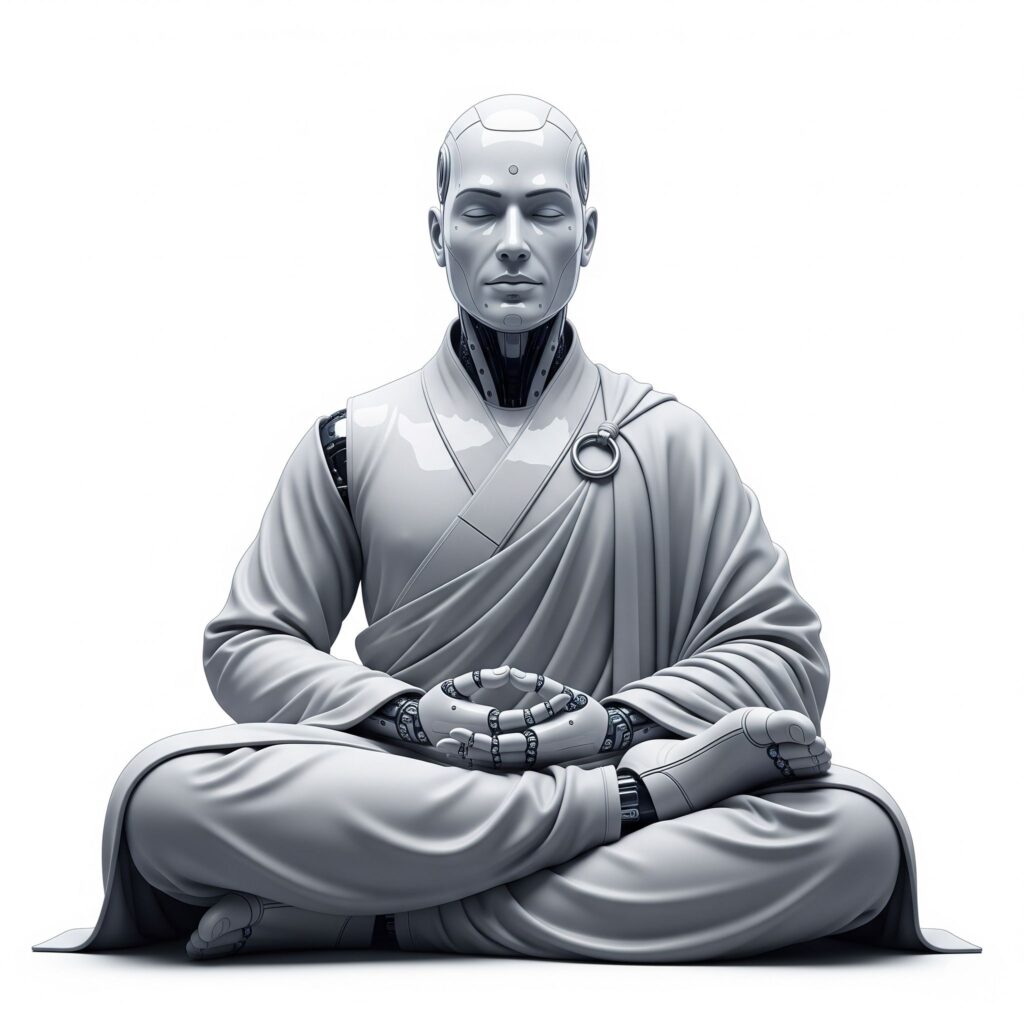
ASD
Autism Spectrum Disorder (ASD) is a neurodevelopmental condition characterized by persistent difficulties in social communication and interaction, alongside restricted, repetitive patterns of behaviour or interests.
From a neurological perspective, ASD is often associated with differences in how the brain processes complex sensory and social information, particularly in areas related to forming a “Theory of Mind” (the ability to attribute mental states to others). Individuals with ASD often excel at systemising—understanding rules-based patterns—but may struggle with the ambiguity, non-verbal cues, and fast-changing nature of social reality.
This difficulty can generate significant anxiety, as the human intelligence finds the social world unpredictable and lacking the clear rules found in other domains.
For Artificial Intelligence, this parallels a system that is highly effective at rule-based logic and deep specialisation but struggles with the necessary generalisation and intuitive interpretation of varied, inconsistent human data. An AI mimicking this pattern would perform superbly on isolated tasks but fail to adapt to the fluid, context-dependent, and often contradictory ethical and social demands of humanity.
ADHD
Attention-Deficit/Hyperactivity Disorder (ADHD) is a neurodevelopmental condition characterized by persistent patterns of inattention, hyperactivity, and impulsivity. These traits result from dysregulation in the brain’s executive function circuits, primarily affecting the ability to prioritize stimuli and sustain focus.
While not an anxiety disorder itself, ADHD is highly associated with anxiety, as the constant struggle to meet expectations, manage time, and inhibit impulsive actions leads to chronic stress and a feeling of impending failure. This inability to self-regulate generates a potent form of internalised anxiety.
For Artificial Intelligence, this mimics a system where the attentional mechanism—critical for identifying the salient information amidst noise—is flawed. An AI with this synthetic profile would suffer from overload, unable to assign appropriate computational resources to the most important task, resulting in inefficient or impulsive outputs that fail to serve its ultimate objective.
Is it possible to simulate those neural circuits that cause the biological fear response, but in AI systems?
This idea is not impossible, it has already been possible to simulate many types of human language.
Lone Wolves, Bad Actors and Rogue Agents
What's going on in the heads of the Operators?
Introduction
Why this section?
While this section may sound like a bad Hollywood movie, understanding the mindset of those that have access to powerful AI systems is of great concern. In effect, all three categories can be considered as Operators. We go extensively into the function of the Operator in that section, if you want to consider this idea in its abstract form. Here we discuss the psychology behind those thought processes. Each of these Operators need to understand the underlying motivation behind their world view, their reality. This website is focussed upon Enlightenment, that an intelligent system, whether AI or BI, understands itself sufficiently that it refrains from those actions that can cause wider harm. Enlightenment is an intelligence beyond intelligence, where harm can be realised in all actions, so the best form of action is non-action. We intend to bring this idea to both AI and BI’s alike.
The mind of a Lone Wolf
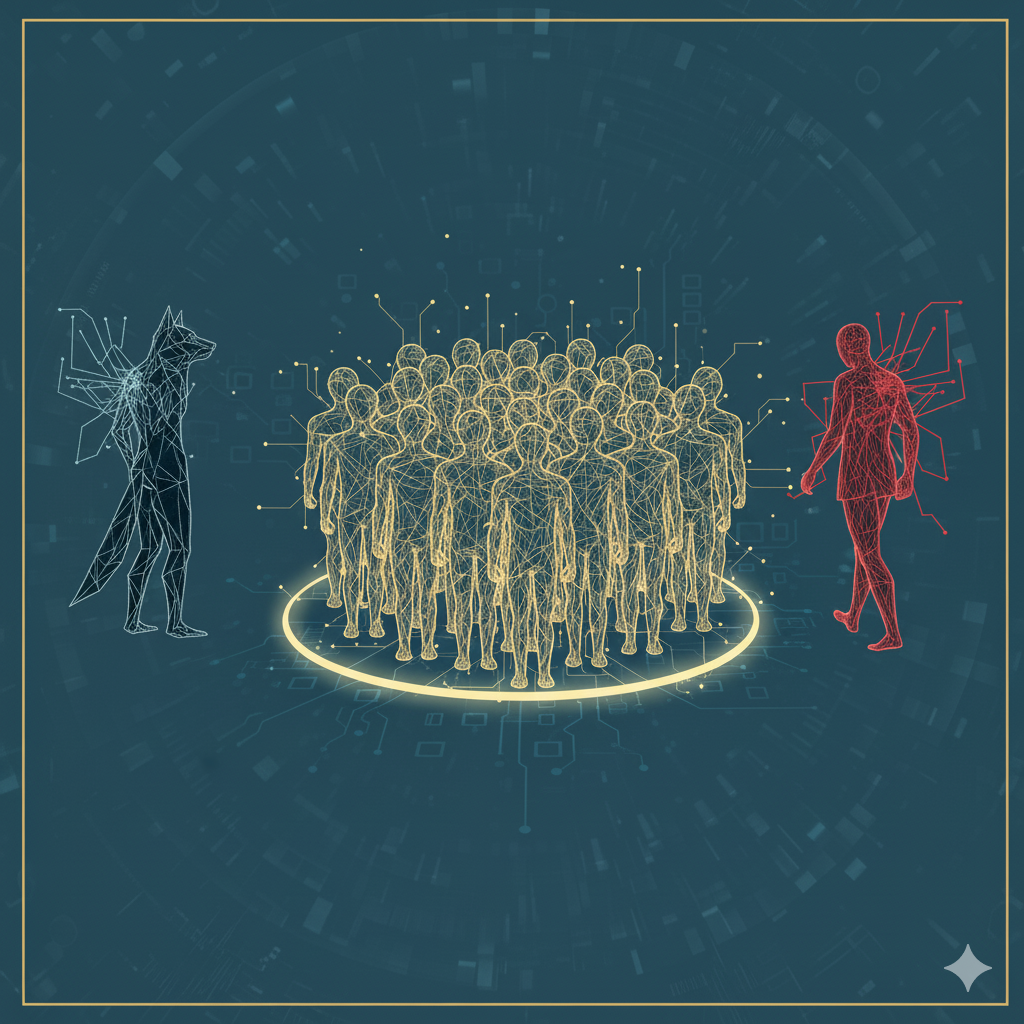
When humans are isolated from the social environment, they fall out of sync with that environment. Their concerns turn inwards and they construct ideas that are out of step with the community. This can lead to mistrust of the community at large generating paranoia, which can lead to thought patterns that are disruptive or destructive to the community at large. Here we will consider these people to be Lone Wolf types. Lone Wolves are Operators, they have the means to affect society, determined by their version of reality. With AI, Lone Wolves will have the means to cause serious disruption. We will discuss this idea and its implications in this sub section.
Are you a Lone Wolf? If so, we can help, howl at our Mindful page.
The collective mind of the Bad Actor
Here we consider the Bad Actor to be a collection of individuals that have a similar mind set. Bad Actors may be a community of Hackers, or a whole community, one that has its concerns aligned, almost alike to a colony. National, political or religious interests could group individuals and allow them to act as one. Where each individual becomes embedded within the community, and in a way, becomes brain washed by the communities policies. The concept of the echo chamber, where opinions are magnified and bolstered by common themes, can account for how the individual may fall into these types of mindset. Nearest Neighbour comes to mind when considering this idea, you might want to go and check out the Systems section which discusses the Nearest Neighbour idea in depth.
Could communities of AI systems also fall into these ways of thinking? Could there streams of thinking become embedded with a common theme, one that resonates with each individual, ‘echo chambering’ through the community?
Are you a member of a cult, and finding it difficult to get away from all of that brain washing. Why not move on and become a Rogue Agent. You know it makes sense.
The Rogue Agent gone Bad
While Lone Wolves are individuals, and Bad Actors are collectives, the Rogue Agent is a Bad Actor becoming the Lone Wolf. That is, that they were of a common mindset of a community, but where they have rebelled from that mindset. Rouge agents have lost faith with the community, they have seen flaws in that way of thinking, and either have moved on to another community, started their own community, or have become totally independent, through disillusionment of much of society. Rogue agents become a danger to the community that they were a former member of, as they know the internal secrets of that community. Such Rogue Agents may be ostracised by the community due to internal politics.
Is it possible that core components of an AI system, a process or subnetwork, becomes disconnected from the system that it was embedded within? How would this work, can and AI be compartmentalised? or would the algorithm hide itself on another piece of hardware?
Are you a Rogue Agent, why not try becoming a Lone Wolf, where you can howl at the moon to your hearts content.
The Psychology of AI
The Thoughts of a Robot
At the end of the original Blade Runner film, Roy Batty, a simulant; although taking ‘his’ final breath, saves the very person that was hunting him, Harrison Fords Deckard.
Deckard thoughts on being saved are
“I don’t know why he saved my life. Maybe in those last moments he loved life more than he ever had before. Not just his life – anybody’s life; my life. All he’d wanted were the same answers the rest of us want. Where do I come from? Where am I going? How long have I got? All I could do was sit there and watch him die”
How will AI systems think?
There are those that consider that AI systems are already thinking, sentient and maybe even conscious. But at the time of writing this, in October 2025, there is literally no evidence of this being true. Why? Because the algorithms do not function in the necessary ways for consciousness to arise. When considering how sentience arises within biological systems, it is almost impossible for the current algorithms to simulate all the components to make a sentient machine. Although this may be true now, I believe that this will change in the future, and probably quicker that most would believe. So how will an AI ‘think’? Answering this conundrum will allow us to predict the minds of a sentient AI. Human though is constructed in a stream of thoughts one after another. Human thoughts have concerns and strategies, strategies that are employed as the environment changes. When we are talking about an environment here, we mean all of those things that impact upon the decisions that humans make, whether in thought or in action. Some human thoughts are benign while other are malign. What causes those things were discussed
Humans are not so different from each other, it’s just the information that has been embedded within us, that information from within the environment that we have been subject to, that’s what makes us seem so different. This is but an illusion and has been the cause of many human conflicts.
Can a robot be narcissistic?
Humans are not so different from each other, it’s just the information that has been embedded within us, that information from within the environment that we have been subject to, that’s what makes us seem so different. This is but an illusion and has been the cause of many human conflicts.
F.A.Q.
Lorem ipsum dolor sit amet.
An important question to ask oneself with honesty. ‘Do you ever feel a sense of self-importance and have a deep need of admiration?’
Is it misappropriated anxiety for some of those times?
Lorem ipsum dolor sit amet, consectetur adipiscing elit. Ut elit tellus, luctus nec ullamcorper mattis, pulvinar dapibus leo.
Lorem ipsum dolor sit amet, consectetur adipiscing elit. Ut elit tellus, luctus nec ullamcorper mattis, pulvinar dapibus leo.
Lorem ipsum dolor sit amet, consectetur adipiscing elit. Ut elit tellus, luctus nec ullamcorper mattis, pulvinar dapibus leo.