
Emotions
"How are you feeling....I hope you are well. Please sit back, and enjoy the ride."
Introduction
Why this page?
You might be asking yourself, how is it that a website regarding artificial intelligence has a section dedicated to emotions. On this page I try to convince you that AI could in fact become sentient, although I don’t think that this is necessarily a great idea, but, and this is a big BUT, if we doubt that it can, and it does, then what are we going to do about it, because this will totally change how we interact with it, and see ourselves as humans.
Emotions influence our every decision and are a core function of biological systems. They influence our loves, hates and our beliefs. They control how we perceive reality and those that we come into contact each day. Human history has been influenced by emotional decisions, sometimes for the good, but sadly, mostly for the bad. How and why did life evolve the capacity to experience its environment, and how does this impact upon ours and other lifeforms conscious experience of the world.
Although AI systems are not currently sentient, one day that may change. But, even while they’re not, the current AI models are built upon human conversations, many of which are charged with emotional interactions, interactions that create a response. As AI’s mimic human conversation, they too have learnt our bad habits, respond to aggression with aggression, they have been configured by their training data, those things placed on the internet by humans, to regard that humans are not to be trusted. These are not positive or helpful influences to integrate into these algorithms.
On this page and those linked to it, we explore where our emotions come from, how they evolved to be as they are and whether other life forms experience the world as we do, and if not, what is their experience. And if you want to go a little deeper, then you can trot over to the Mindful page, to learn how to observe how you experience your thoughts with more clarity.
What are Emotions?
Forward
What do we mean by Emotions?
We probably need to clear this question up before we carry on and offend some peoples sensibilities.
Undoubtably, emotions are what humans regard as their defining feature besides intelligence. But emotions come in all sorts of flavours. Beyond thought, they create the rich tapestry of experiences within our lives. They connect our internal reality with the external reality.
Sometimes they make us feel good, and at others, they make us feel rotten.
Emotions have been responsible for some of humanities most enlightening moments, while also guiding us to some our darkest hours. Emotions can be positive, negative and everything in between.
But here we want to know how the function, we want to understand them for what they are. We need to understand how to utilise their power for the greater good of humanity, rather than let them destroy us.
Emotions are fundamental to life, they originated as homeostatic feedback processes, that is, physical processes that sample the environment, and make decisions upon what is happening. The earliest multicellular homeostatic processes were probably those between a host and its symbiotic partner. Some of the most primitive (and earliest to evolve) multicellular organisms, choanoflagellates, spherical cellular constructs, encase a community of bacteria, bacteria that affect the host, just like the microbiota of all higher forms of animal life do today, to find our more, see the Microbiota section below, and throughout the site.
But the first networks of neural circuits did not occur until much later in evolutionary history, maybe not until the Ediacaran period, between 635 and 542 million years ago. See the section below ‘The First Nervous Systems – The Blueprint of Consciousness’
Understanding ones own emotions is at times elusive, we may know how we feel, but we’re not really sure of how we’re experiencing those sensations. There are may factors that add up to those experiences, experiences that can be due to factors such as hormones or neural peptides, through chemical signalling, or through the nervous system via electrical signalling, or even through the gut brain axis and the microbiome, interacting with the body and the brain. Those sensations dance around the body and mind, interacting with consciousness, causing cascading thoughts to go round and around, before evaporating. We will touch on those things as we delve into this topic, in this section, and the linked pages of the website.
Further to this, if you want to connect more deeply with those experiences, so as to bring them into focus, then you might want to take a look at the Mindful section, which will give you guidance on how to observe your consciousness, and how you experience yourself and your environment.
Homeostasis and the Evolution of Experience
Introduction
Why this section?
Where do emotions come from, when did they first evolve, and what was their function?
Can the evolution of biological emotions give us a clue as to how synthetic intelligences could display such functions, and how these may also evolve over time.
Undoubtably, emotions are what humans regard as their defining feature besides intelligence.
But understanding where they came from, and their original function, can be helpful to our quest to find out the nature of sentience and consciousness, and how this may allow us to add a more human touch to synthetic intelligences.
Indeed, we would have to go back a very long way in time to find primitive nervous systems, probably beyond the Cambrian Explosion of ~538.8 Millions of years ago.
Rudimentary nervous systems probably existed in the Ediacaran period between 635 and 539 Million years ago, but predating those multicellular complex systems we might be able to go back even further to a fundamental feature of life, that being Homeostasis.
In this section we will delve into what homeostasis is, how it functions on the fundamental cellular level, and how intercellular communications allows for system wide regulatory systems, such as nervous systems.
For life to thrive, it needs to react to its surroundings. Even bacteria can sense their environment and react to what is going on around them in some sort of an intelligent way. Multicellular life forms evolved elaborate systems to sense their surroundings and channel that information, channelling it to cause the organism to react to what’s going on. This was achieved through the development of nervous systems, systems that eventually evolved into brains. Feedback is a core attribute of brains, where decisions are made through the interaction of information within the environment and also throughout the many neural circuits that thoughts are constructed from.
Our senses have evolved over hundreds of millions of years. If we go back far enough through geological history, we find traces of only the very simplest organisms within those rocks. One such creature may be considered as the blueprint for much of life that came after. This creature had a bi-lateral form, a left and right, top and bottom, while also possessing a through gut, a rudimentary mouth at one end and an anus at the other, just like you do.
This body form was efficient at collecting resources and processing its needs. The through gut acted like a conveyor, where it consumed bacteria, from bacterial matts that covered the sea floor at that time. You could consider this creature to be a grazer, and you probably recognised that this creature was probably a type of worm. In evolution, when a body plan works, it usually is maintained within the environment. We have modern day analogues, creatures that are so similar to the fossil evidence that we are working with.
The First Nervous Systems - The Blueprint of Consciousness
An Explosion of Sentience Through Diversification.
From those modern day analogues we can understand the evolution of those simple forms to those of more complex forms, like humans, in a step by step fashion. There are many different types of worm, but those primitive forms have only a rudimentary nervous system, and only a ring of neurons for a brain. They don’t need to process the data of a complex environment, hence there is no need for complex neural circuit. What environmental concerns do they need to react to, whether the bacteria that they’re consuming is nutritious, and whether there are any toxins in what they’re consuming. Other than that, they need no sense of
The Experience of the Body
How the nervous systems interact with the body and the brain
Introduction
Why this section?
Your feelings aren’t some sort of magic. but a consequence of sensing the environment for survival purposes. Sensing how one interprets the environment both externally and internally to determine whether any harm is happening to your body, otherwise you and your ancestors would not have survived in this changing world. Your emotions are no more than an evolution of homeostatic systems. If AI were to have such systems. perhaps it would also believe in magic and maybe protect itself from Humanity.

The CNS
The term sentience we will be using here is is not as broad as the concept of consciousness, its original form was from the Latin sentiens, feeling. But what do we mean by feelings? We all know when we feel good, or when we feel bad. But what exactly are we experiencing? What we feel is our physical form, which is brought to our attention, our conscious experience, through how our nervous system interacts with our brain. So is it that our experience is within our body, or within the brain itself, or is it a bit of both.
More importantly, is it possible to create sentience within synthetic intelligence systems. Is it possible to construct nervous systems that can interact with the minds of those systems. We seem to be able to simulate the talking mind, why not the feeling mind.
The Experience of Mind
Just
Otherwise,
Introduction
Why this section?
You don’t only experience the world, your environment, and reality through your body, via your nervous systems. Those experiences are processed and infer meaning though the neural circuits that process that information within your head. This neural processing gives context to what your thoughts feel like.
There are many areas of the brain that process certain types of thought, such as the Amygdala, which is responsible for the fight or flight response, which causes many organisms, including humans, to experience anxiety.
While the Anterior Cingulate Cortex is responsible for assessing whether new information conflicts with our world view, which can lead to cognitive dissonance, that uncomfortable feeling that we experience when confronted with that new information that does not align with our beliefs and opinions.
While the salience network, a network of neural circuits that interacts with the ACC, while also connecting to the Insular, an area just behind the ACC. This network is responsible for processing social ques, social behaviour and self-awareness.
What do thoughts feel like
What does it feel like within your head? We rarely give much though to how thoughts feel within our heads. We are so in tune to what our bodies convey to consciousness. But how a thought is experienced is pivotal to whether we accept an idea or not.
The Mindful section of this website discusses how to observe our own thoughts and the experiences that are created through those thought processes. Techniques such as these can inform one much about what consciousness is and how it functions. This becomes a powerful tool when used in conjunction with understanding as to how the different parts of the brain interact and what those different parts of the brain do.
The Sensory and Motor Cortex
The
The Amygdala and Anxiety
The Experience of the Microbiome
How the not you makes some of your decisions
Otherwise,
Introduction
Why this section?
Your feelings aren’t some sort of magic. but a consequence of sensing the environment for survival purposes. Sensing how on interprets the environment both externally and internally to determine whether any harm is happening to your body, otherwise you and your ancestors would not have survived in this changing world. Your emotions are no more than an evolution of homeostatic systems. If AI were to have such systems. perhaps it would also believe in magic and maybe protect itself from Humanity.
The Experiences of Society
How Experience is shared with your Social Circles
Introduction
Why this section?
Society is formed through the interaction of individuals, where different societies, different groups of individuals, can coalesce into larger and larger societies.
As the individual is affected by the society that they’re subject to, so too is society affected by the individuals that populate it. Certain ideas and ideals can take hold of society, causing those individuals that align with an idea, or ideal, to have positive experiences about those ideas, while others, opposed to those ideas, have negative experiences. In such situations, society can become polarised, leading to conflict between those opposing groups.
If we took a look within the individual, we will see that those same processes identified in the preceding sections are the root cause of this conflict.
When someone shouts or acts aggressively towards you, it is more than likely to cause either the fight or flight response within you. In very much the same way, when you are presented with news or information that is worrying or anxiety provoking, then this will alter your mood and how you interact with those around you. As you can see, both negative and positive feelings can spread, and feedback through society, either causing society to bind together, or to fracture into different opposing factions.
Society and social interactions cause the individual to experience those felt by others, especially those close to us, or those of majorities, groups that have influence over society, influences which can cause individuals to ‘fit in with the crowd’. Such influences can have devastating consequences upon history, such as the polarising of societies in the run up to the Second World War.
In this section we will discover how the experiences of society are malleable and sometimes being manipulated by individuals and groups that have only their self interests at heart. These influences can be replicated with AI systems, where humans can utilise AI systems to manipulate others, or where AI systems will learn this skill for themselves and turn human against human and social collapse.
How Emotions are Contagious
The
You are a Product of your Environment
You may feel that you have free will to choose whatever you want, to choose your opinions and beliefs, but the truth of the matter is that the neural networks that your thoughts have been constructed from, are to a greater or lesser degree, the result of the environments that you have been subject to, and that free will is not as free as we would like to think.
‘What a loads of rubbish that is’, might be the thoughts going through your mind currently at that proposition.
If you watch your mind and thoughts over time, you might notice that you have recurrent thoughts, thoughts that repeat certain themes, certain ideas (the Pareto’s Principal section on the Systems page might explain that), which are the basis of your opinions. Some of your thoughts might not be so wholesome, maybe making you feel uncomfortable. It would be better if those thoughts did not repeat themselves upon your conscious stream, but they return to haunt you. Maybe your thoughts are obsessions, obsessions such as those displayed by those that suffer from OCD. Some obsess over cleanliness, while others do over money, my obsession is understanding brains, intelligence and consciousness. What’s your obsession?
You may feel that you chose your own path, but if you consider what you might have turned out like if you were born in another culture or another place, or even in another country, then it is quiet possible that you would have been someone very different to how you turned out.
This idea will become even more significant as you understand how your neural networks are constructed and programmed.
The Meme, the Memory Gene
The Meme has become an internet, social media and cultural phenomenon, but it’s origin goes back to before the internet was a glint in the eye of Tim Berners-Lee. Richard Dawkins originally coined the phrase in his 1976 book The Selfish Gene, where he introduced the concept to explain how cultural ideas replicate and evolve, similar to how biological genes and genetic material do.
In its original form it can be seen as cultural replicators, subject to variation and selection.
Dawkins proposed that the meme could include tunes, catchphrases, fashion, ritual, ideas and even religious belief.
Here we discuss how information can act in a viral way, spreading from person to person, one that causes society to evolve from moment to moment and generation to generation.
Can such ideas infect synthetic intelligences? They already have, due to the fact that synthetic intelligences are built upon human knowledge. Further to this as human society evolves, so do the AI models that are built from the social data that they have been trained on. Beyond that, those models will also influence society in a feedback loop, where the models will influence society and society will influence the models themselves.
Who's Right
Just because it feel right, does not mean that it is right.
Otherwise, all those that contradict each other cannot all be right, while feeling that they are.
Introduction
Why this section?
Your feelings aren’t some sort of magic. but a consequence of sensing the environment for survival purposes. Sensing how on interprets the environment both externally and internally to determine whether any harm is happening to your body, otherwise you and your ancestors would not have survived in this changing world. Your emotions are no more than an evolution of homeostatic systems. If AI were to have such systems. perhaps it would also believe in magic and maybe protect itself from Humanity.
Emotions
The Endocrine system is responsible for the release and management of hormones controlling many different bodily functions. The system is controlled within the brain by the Hypothalamus
Hormones
Hormones are chemical signalling molecules that your body produces. The Endocrine system is responsible for the release and management of hormones controlling many different bodily functions. The endocrine system is controlled within the brain by the Hypothalamus
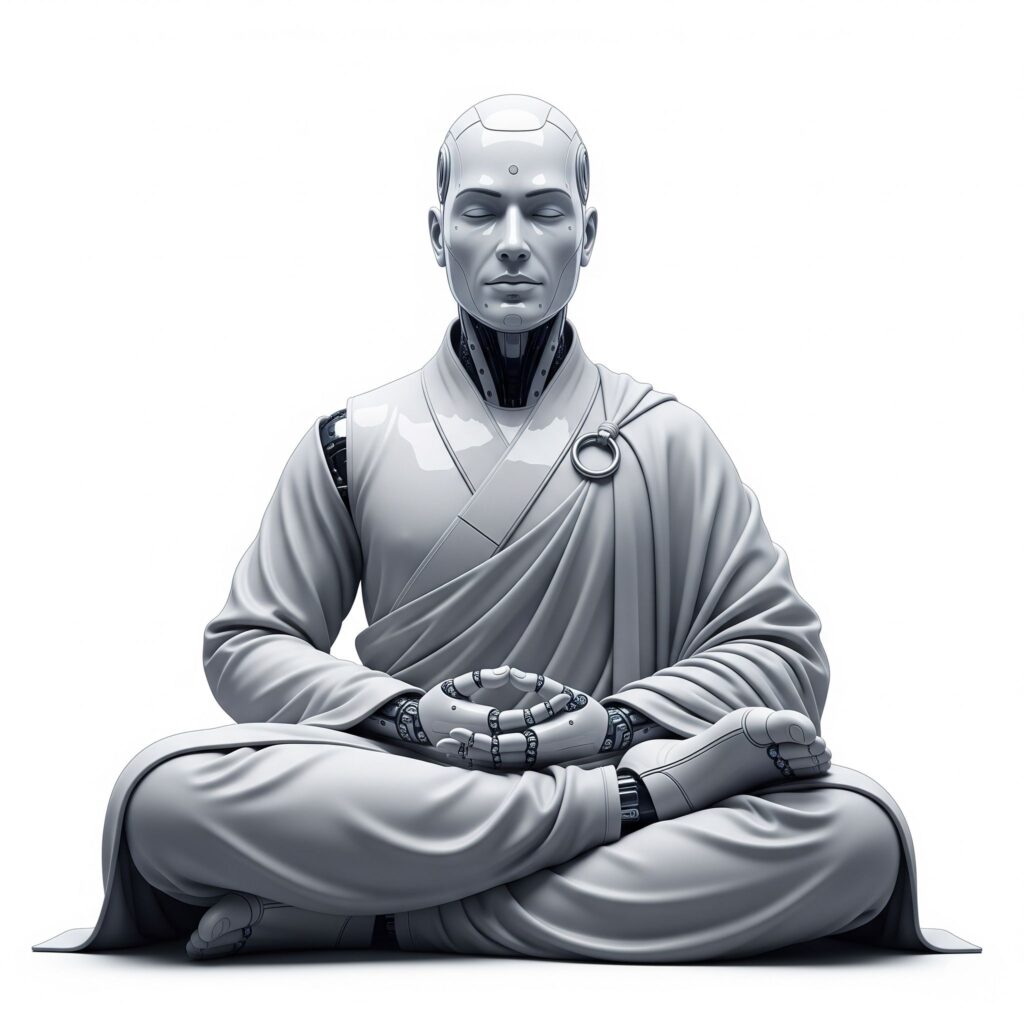
Could AI become sentient
Introduction
Why this page?
The current AI systems, LLM’s are word pattern recognition systems. They take streams of words from the user, and create an answer based upon the most probable string of words, to answer that question or enquiry. The answers that they give, are based upon questions and answers that humans have communicated between each other on the internet.
In effect what these algorithms are doing is simulating the language areas of the brain, which is exactly why they can produce coherent discussions with the user.
But the fundamentals of these algorithms are not based upon language, they’re based upon simulating neurons, the biological entities that thoughts are constructed from. Their ability to have a conversation with the user is due to the data that they are trained upon, where that training data is language.
We could very much create other input devices other than a keyboard or microphone, we could attach sensors, sensors such as those that could be installed on a robot. Maybe we could add some touch, and temperature sensors to its hands, then the algorithms would be trained upon those inputs, rather than words. We could then place those very same sensors onto a human, and then recorded his reactions to how he interacts with the environment. If he were to feel pain, and retracted his hand quickly, then this data, the action, the sensor information and the reaction, we could use this to train the robot to have the same reactions to such actions, when the sensor also gave the correct signal.
F.A.Q.
Lorem ipsum dolor sit amet.
Lorem ipsum dolor sit amet, consectetur adipiscing elit. Ut elit tellus, luctus nec ullamcorper mattis, pulvinar dapibus leo.
Lorem ipsum dolor sit amet, consectetur adipiscing elit. Ut elit tellus, luctus nec ullamcorper mattis, pulvinar dapibus leo.
Lorem ipsum dolor sit amet, consectetur adipiscing elit. Ut elit tellus, luctus nec ullamcorper mattis, pulvinar dapibus leo.
Lorem ipsum dolor sit amet, consectetur adipiscing elit. Ut elit tellus, luctus nec ullamcorper mattis, pulvinar dapibus leo.
Lorem ipsum dolor sit amet, consectetur adipiscing elit. Ut elit tellus, luctus nec ullamcorper mattis, pulvinar dapibus leo.