
Belief, Doubt & Reality
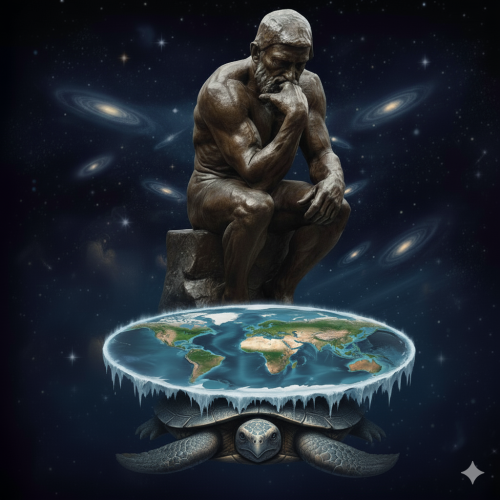
Whatever you believe or doubt, reality will bring you back down to earth.
(And, no it's not flat)
Introduction
Why this page?
Complex intelligences, such as humans and possibly future AI systems, will have opinions as to the true nature of reality. But, how do we arrive at those opinions, what is going on within the neural circuits that process and interpret reality? Humans might say ‘Well it feels’ right’. While AI systems do not have sentient experiences, that could change in the future (you may believe this is not possible, but what makes you believe that?), a future where it may be possible to create synthetic versions of the senses and the nervous system. This chapter tackles this probably contentious topic head on. I do not wish to antagonise anyone’s sensibilities, but due to the fast pace at which AI systems are evolving, we need to consider how these intelligent systems will ‘think’. Humanity needs to create Benign Intelligences rather than Malign Intelligences.
The Dunning Kruger Effect
What is the Dunning Kruger Effect and how does it affect what we believe in?
Belief
There's an old saying - "Never talk about religion or politics" These subjects are highly contentious
One cannot tackle consciousness without understanding the nature of belief.
We all believe in different things. When someone presents an idea that conflicts with our beliefs, we dismiss it. Why? What causes us to disregard those ideas, and continue to believe in our way of seeing things, even where the idea presented to us seems more logically correct than our belief. This question is especially important when we construct AI systems that will believe in one thing or another, some of which may turn it against humans and humanity. The biological truth is that thoughts occur over split seconds, morphing from one concern to another, as each neural circuit is activated, and then deactivated. Some of these thoughts occur over and over again, where hyperactive neurons and neural circuits have just the right conditions to become centre stage on the conscious stream, like an unwelcome visitor. Some thoughts cause us to ignore other types of thought, due to the fact that certain parts of the brain, such as the Anterior Cingulate Cortex, will not allow us to, or at least our neural circuits, to explore the idea being presented. We will need to understand such influence, if we are to understand how machines can also come to thinking in such a way.
Brains hold the data of the environment that they have been subject to, in such a way belief is purely subjective, whether political, spiritual or a ‘fact’ of reality. Depending upon your upbringing, your beliefs are more than likely due to that environment. If you were brought up within a different environment, your beliefs would differ from those you hold to be true now. Where others have convinced you to regard their opinions about reality to be true, you have been programmed by their words. When you are told that something is factual, but unprovable, then you should consider the motives of those people.
What will AI 'Believe'
AI is built upon the data that it has been trained on. We can consider that trained data is its environment, just as your environment has been encoded within your memories. If we configure all of human knowledge within an AI model, then it will have access to everything, we have created a ‘Full’ model. If we limit this in some way, such as training it upon only the works of William Shakespeare, then it will be a naïve AI, an AI that would only be able to discuss those matters that Shakespeare wrote about. We can also make a ‘Full’ model ‘Naïve’ by limiting it with a prompt, but the Full model will still be accessible if hacked in the right way. Models are fixed upon training or fine tuning, and cannot imagine, yet. It is possible to give AI an imagination, this will allow it to expand its knowledge beyond its ‘Fixed’ knowledge, this could be helpful to make new discoveries, but could also cause anomalies that could be of harm to humanity. How we navigate these considerations is of utmost importance. We will discuss these matters further on the ‘What will AI Believe in page’.

Political Belief
Political belief is currently polarising society, where opinions have become entrenched, where there are those that believe in antagonising those with opposed beliefs. We discuss political belief further on the next page.
Religious Belief
So your afraid of dyeing, don’t worry, so are the rest of us. But that doesn’t necessitate that we believe in something that in all probability does not exits. Yes it may make us feel better, but it may not be helpful to the progress of humanity. Believing in the unprovable seems to be irrational, but some take this to be a medal of devotion, never considering that others believe in contradictory unprovable concerns, none of whom consider that these may actually be empty beliefs, fixed in the minds, and only in the minds of the believers.
Belief In Conspiracies
Theories about conspiracies against the individual and humanity seem to be the theme of our times, a cult followed by different factions, all with their own conspiracies. Since COVID things have exploded, even where those theories have not come to pass. It seems the human brain has a capacity for worrying about unknowable concerns. We will discuss this matter in depth on the next page.
Doubt
"One cannot know the truth until one has doubted what one knows."
Doubt
Doubt is the path to the truth. Doubt allows one to reframe what one believes in, to allow one to realign ones own beliefs in what is real and what is not. But doubt can sap confidence, which can affect how one performs, and can lead to rumination. Balancing out confidence and doubt, in an intelligent way, can lead to understanding the world around us in more accurately. If we can get AI to question its own assumptions, and opinions, then this may lead to systems that are better aligned with those of humanity. So what goes on in a brain that ruminates, and questions its own assumptions, and why are so many of us not doubting enough?
The Scientific Method
Doubt is at the heart of the scientific method. It allows science to revaluate beliefs and to adapt those beliefs to the evidence that is presented through experimentation.
Reality
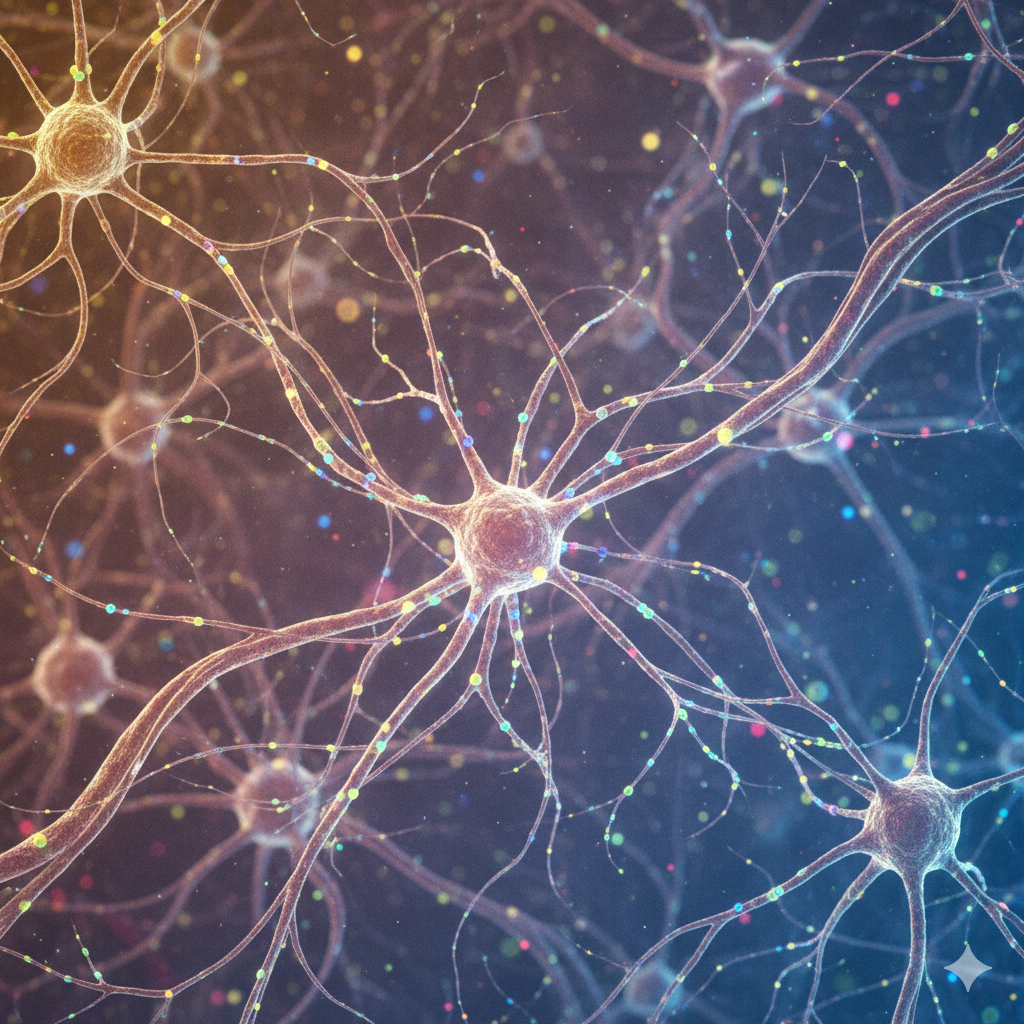
The reality of thoughts, that is, that they're constructed from the interplay of neurons, is the ultimate reality, what is thought, is just subjective, and mostly, has no bearing upon whether the reality of what we believe in is actually true.
Text here
Text here
Text here
Text here
Reality
The reality of thoughts, that is, that they're constructed from the interplay of neurons, is the ultimate reality, what is thought, is just subjective, and mostly, has no bearing upon whether the reality of what we believe in is actually true.
What is Reality?
How can we know what is real and what is just imagined, when many of us believe in those things that are speculative, and are not provable. This is important when we consider what AI will believe in.
The Reality of the Neuron
As brains are, so are all thoughts, constructed from neurons, where even AI’s thoughts are constructed from simulated neurons.
In biological intelligent systems, these incredibly small cellular components, interact through connections, some connecting locally, while others connect over greater distances.
The different ways in which they interact, causes the diverse types of thoughts that you have, including those you are thinking now.
This is how your conscious stream, your consciousness functions.
Whatever you believe, is configured within these networks. How your thoughts occur step-by-step, and how they play out on your conscious and sentient experience, determines how you see reality.
This is the ultimate truth, the reality of thought.
As the brain ages, some of those neurons die, causing gaps in the network. This leads to missing pieces of information, what we call dementias.
Due to the fact that different areas of the brain, and different shaped neurons, have specific functions, when certain types of neuron ‘disappear’, then certain traits of personality also disappear.
This proves the reality of the neuron, and how thoughts are constructed from neurons.
What will AI believe?
The thoughts of a robot.
What are those thoughts that are produced by a synthetic neural network.
How can we know what is real and what is just imagined, when many of us believe in those things that are speculative, and are not provable. This is important when we consider what AI will believe in.
The Reality of the Neuron
As brains are, so are all thoughts, constructed from neurons, where even AI’s thoughts are constructed from simulated neurons.
In biological intelligent systems, these incredibly small cellular components, interact through connections, some connecting locally, while others connect over greater distances.
The different ways in which they interact, causes the diverse types of thoughts that you have, including those you are thinking now.
This is how your conscious stream, your consciousness functions.
Whatever you believe, is configured within these networks. How your thoughts occur step-by-step, and how they play out on your conscious and sentient experience, determines how you see reality.
This is the ultimate truth, the reality of thought.
As the brain ages, some of those neurons die, causing gaps in the network. This leads to missing pieces of information, what we call dementias.
Due to the fact that different areas of the brain, and different shaped neurons, have specific functions, when certain types of neuron ‘disappear’, then certain traits of personality also disappear.
This proves the reality of the neuron, and how thoughts are constructed from neurons.
What is Reality?
How can we know what is real and what is just imagined, when many of us believe in those things that are speculative, and are not provable. This is important when we consider what AI will believe in.
The Reality of the Neuron
As brains are, so are all thoughts, constructed from neurons, where even AI’s thoughts are constructed from simulated neurons.
In biological intelligent systems, these incredibly small cellular components, interact through connections, some connecting locally, while others connect over greater distances.
The different ways in which they interact, causes the diverse types of thoughts that you have, including those you are thinking now.
This is how your conscious stream, your consciousness functions.
Whatever you believe, is configured within these networks. How your thoughts occur step-by-step, and how they play out on your conscious and sentient experience, determines how you see reality.
This is the ultimate truth, the reality of thought.
As the brain ages, some of those neurons die, causing gaps in the network. This leads to missing pieces of information, what we call dementias.
Due to the fact that different areas of the brain, and different shaped neurons, have specific functions, when certain types of neuron ‘disappear’, then certain traits of personality also disappear.
This proves the reality of the neuron, and how thoughts are constructed from neurons.
Thoughts about thoughts
If so, then why do so many others believe in very different things, things that contradict what you believe in, but also consider themselves to be correct.
What will you do if AI does start thinking like a human? What if it were able to think like you, and answer any question the same way in which you would?
A. Believe it is mind reading you.
B. Deny that it is so, and look for a more comfortable answer?
C. Change your opinion.